If you only remember one thing, remember this: 2023 was not a normal housing year, and pretending it was would have been an expensive mistake.
When buyers and sellers searched for answers, the same questions kept showing up: Are prices still rising? How much damage did mortgage rates do? Is this a buyer’s market or a seller’s market? And what does a sensible plan look like when the numbers keep moving?
Several authoritative references help frame the year. NAR reported that existing-home sales totaled 4.09 million in 2023, the lowest annual pace since 1995, and Freddie Mac’s Primary Mortgage Market Survey showed the 30-year mortgage rate spending most of the year in the 6% to 7% band, with a 2023 peak above 7%. I keep both facts in view because the market did not freeze; it repriced access. Price and payment stopped telling the same story.
Warren Buffett’s old advice about staying cautious when others are excited fits the mood here. In 2023, caution was not weakness. It was risk control. In the sections below, I will walk through the market snapshot, the rate shock, the behavior of buyers and sellers, the practical moves that held up, and the signals I would watch next.
Market terms, in plain English
Before I get into the numbers, I want to strip out the jargon. Real estate can sound technical because people often use the language of finance to describe the language of daily life. That is a fast way to lose the room.
| Term | Plain-English meaning | Why it matters |
|---|---|---|
| Inventory | The homes available for sale at a given time. | Low inventory usually gives sellers more leverage and gives buyers fewer choices. |
| Affordability | How much home a household can carry without stretching too far. | Rates, income, taxes, and insurance all shape the answer. |
| Days on market | How long a listing sits before it goes under contract. | Shorter times usually mean stronger demand or sharper pricing. |
| Mortgage rate | The cost of borrowing money to buy the home. | Even a small rate change can alter the monthly payment by a meaningful amount. |
| List-to-sale ratio | The relationship between the asking price and the final sale price. | It helps show whether buyers or sellers had the stronger hand. |
1. Market Overview and Statistics
2023 was a year when the broad picture mattered more than the emotional headline. If you only watched price stickers, you could miss the actual market behavior. If you only watched mortgage quotes, you could miss the fact that homes with the right price and condition still moved. The real story sat in the middle.
A tighter market, not a broken market
The main national signal was simple: transactions slowed hard. NAR’s year-end release put existing-home sales at 4.09 million for 2023, down sharply from 2022 and the weakest annual pace since 1995. That kind of drop tells you buyers were not gone; they were constrained. Higher financing costs, limited supply, and stubbornly high prices narrowed the number of homes that felt reachable.
That is an important distinction. A broken market is one where values collapse in a rush and confidence evaporates. A tight market is one where the path to ownership becomes harder, the margin for error gets thinner, and the buyer pool becomes more selective. 2023 looked much more like the second case.
Prices did not simply roll over
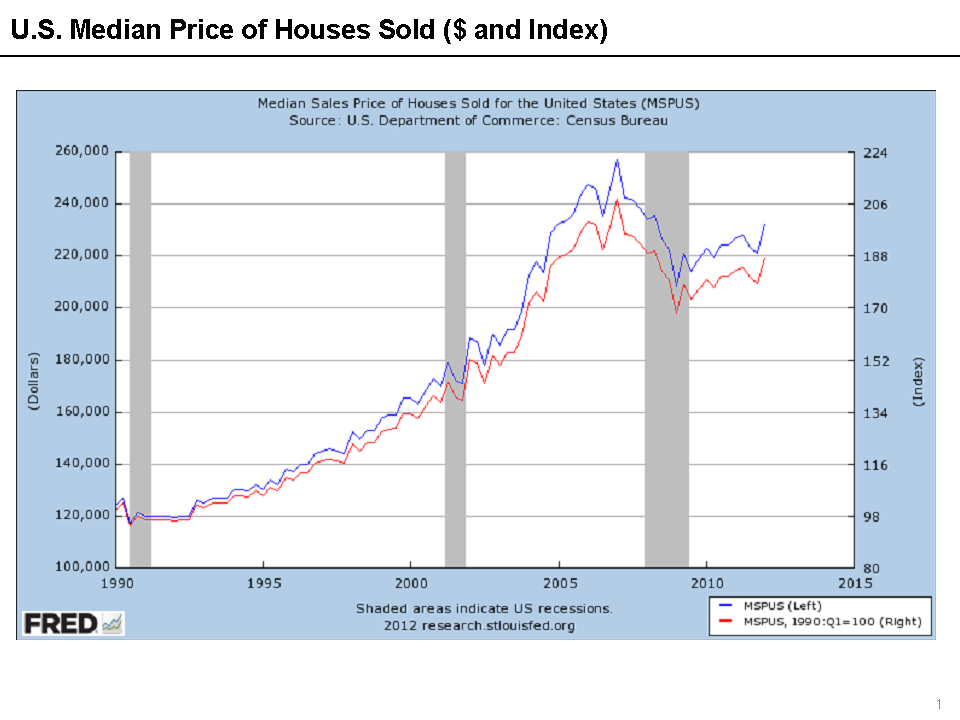
The national price picture was more resistant than many people expected. NAR’s annual median existing-home price for 2023 was $389,800, which means the year did not deliver the kind of easy correction some buyers had hoped for. The S&P CoreLogic Case-Shiller U.S. National Home Price Index also continued to show a broad upward trend through the year, which is another reminder that home prices can stay sticky even while sales volume falls.
That is the part many people miss when they try to read the housing market through a single lens. Supply can be tight enough to support prices even when demand cools. A market can be less active without becoming cheaper. In 2023, that was the operating reality in many places.
Regional differences mattered more than the national average
I would not trust the national average to make a neighborhood decision. Regional conditions diverged. Some areas stayed resilient because jobs, population growth, and limited supply continued to support prices. Other areas felt more pressure because buyers had less room in their monthly budget and fewer reasons to chase a property that did not fit.
That is why local data matters. The national market may be one story, but your zip code is the one that affects your offer, your list price, and your timing. NAR keeps a broad housing statistics and real estate market trends page for that reason: the local view is usually the one that pays the bills.
Snapshot table
| 2023 signal | What the data showed | Practical meaning |
|---|---|---|
| Sales volume | Existing-home sales fell to 4.09 million. | Fewer buyers could clear the affordability hurdle. |
| Median price | The annual median existing-home price was $389,800. | Pricing power did not disappear just because volume slowed. |
| Price trend | National home price indexes stayed firm through the year. | Well-located homes still held value. |
| Market tone | Choice was limited in many areas. | Buyers had to be more selective, and sellers had to be more realistic. |
2. Impact of Interest Rates
In 2023, mortgage rates were not background noise. They were the whole drumline. When rates move that much, the monthly payment changes faster than the public conversation does, and the payment is what most households actually live with.
The rate range that shaped the year
Using the Freddie Mac 30-Year Fixed Rate Mortgage Average series on FRED, the 2023 weekly average worked out to roughly 6.81%. The low point I tracked for the year was 6.09% in early February, and the high was 7.79% in late October. That swing was enough to move housing decisions from “yes” to “not yet” for a lot of families.
Here is the cleanest way to think about it: a rate change does not just adjust the cost of money. It adjusts the size of the home you can safely reach for. On a $400,000 loan, the monthly principal-and-interest payment at 6.09% is about $2,421, while at 7.79% it is about $2,877. That is a difference of roughly $455 every month. The house did not change. The payment did.
What higher rates do to buyers
- They narrow the search. Buyers who could once stretch into a larger home often need to reset their ceiling.
- They punish impatience. If the math is tight, a rushed offer can become a long-term burden.
- They reward preparation. Pre-approval, reserve cash, and a clear budget matter more when rates are elevated.
- They make tradeoffs visible. Buyers begin comparing commute, size, condition, and payment all at once.
What higher rates do to sellers
Sellers often assume higher rates only hurt buyers. That is too simple. Higher rates also change seller behavior. Some owners stay put because they do not want to give up a low-rate mortgage. That reduces inventory. Other sellers price more carefully because they know buyers are payment-sensitive and less willing to overpay for cosmetic noise.
The result is a market that can feel oddly rigid: fewer listings, fewer offers, and fewer mistakes tolerated on either side. That is not a crash. It is a pressure test.
Rate shock, translated into real life
People respond to rate changes emotionally because the monthly payment lands in the household budget immediately. A buyer looking at a house in January and again in October could see the same home but a very different financial burden. That is why a sensible buyer in 2023 focused less on the asking price alone and more on the total carrying cost: mortgage, taxes, insurance, and maintenance together.
For plain-language guidance on the broader buying process, the CFPB’s homeownership resources remain useful because they keep the focus on the full decision, not just the thrill of getting approved.
3. Buyer and Seller Trends
2023 did not just change numbers. It changed behavior. Buyers became more selective. Sellers became more cautious. Agents had to explain more and assume less. That is usually what happens when affordability tightens: the market gets less emotional and more operational.
Remote work still shaped expectations
Remote and hybrid work did not disappear in 2023, so buyers kept asking for the same practical features: a flexible room, a quiet corner for calls, a layout that can separate work from family life, and enough space to avoid stepping over a laptop to get to the kitchen. The home office was no longer a novelty. It was part of the baseline brief.
That changed property preferences in subtle ways. Some buyers passed on a larger home that felt inefficient and chose a smaller one with a better floor plan. Others traded square footage for location because the daily commute had become less central to the decision. The lesson is simple: people buy a life pattern, not just a rectangle.
Popular property types shifted toward practicality
In a tighter payment environment, practical homes had an edge. Buyers paid closer attention to move-in readiness, energy efficiency, storage, and maintenance load. A house that looked polished but demanded immediate work often lost ground to a more modest home that was clean, functional, and priced within reach.
That is one reason sellers had to adjust. In a softer market, charm only goes so far. Condition, presentation, and honest pricing do most of the heavy lifting.
Demographic pressure became visible
The buyer pool also changed in composition. First-time buyers faced a harder climb, and repeat buyers often had to decide whether to give up a favorable mortgage rate or delay moving altogether. That created a market where the people most ready to act were often the ones with stronger equity positions, more cash, or a very specific reason to move.
In plain English: the market favored prepared buyers, patient sellers, and anyone who already understood that a real estate decision is a balance sheet decision whether people like that or not.
What buyers actually did differently
- They expanded their search time instead of forcing a quick decision.
- They looked harder at monthly payment, not just list price.
- They became less willing to waive inspections or financing protections casually.
- They compared neighborhoods more carefully because small price differences started to matter more.
What sellers actually did differently
- They watched competing listings more closely.
- They spent more time on presentation and photos.
- They listened more carefully to feedback after showings.
- They priced for the current buyer, not the memory of the previous boom.
4. Advice for Navigating the Market
This is the part that matters most to a normal buyer or seller. A market like 2023 does not reward drama. It rewards discipline. If I had to reduce the advice to one sentence, it would be this: make decisions on the basis of payment, timing, and risk, not optimism and momentum.
For buyers: protect the monthly budget first
Before you look at finishes, ask what you can safely carry each month. That includes the mortgage, taxes, insurance, utilities, and a reserve for repairs. If the house only works when the budget is stretched to the edge, the house is too expensive, no matter how attractive the kitchen looks on camera.
- Get pre-approved early. Not because it is glamorous, but because it sets the ceiling before emotions do.
- Study neighborhood-level data. A citywide average can hide the exact block where you want to buy.
- Do not waive inspections casually. Save your courage for the things that matter.
- Leave room for repairs and closing costs. A slim reserve is a fragile reserve.
- Move quickly only when the numbers already work. Speed is useful after judgment, not before it.
For a broader guide to buying support, the site’s services page is the best place to see how assistance is framed here, and the about page gives the background behind the approach. That matters because the person or team guiding you through the market should be readable before they are persuasive.
For sellers: price for the market you have, not the one you remember
2023 punished wishful pricing. Homes that were priced on memory sat. Homes that were priced on evidence moved. That is the whole story in one sentence. The seller who treats the current buyer as rational, rate-sensitive, and comparative has a much better shot than the seller who assumes the first strong year in the rearview mirror still applies.
- Start with recent comparable sales. Use the market that exists now.
- Present the home cleanly. Buyers who are paying more attention will also notice more.
- Be ready for negotiation. Concessions, credits, and repair requests are part of the climate.
- Respond quickly to feedback. A slow response becomes a long vacancy in the wrong market.
How to negotiate without creating friction
Negotiation in a constrained market should feel like risk management, not theater. Buyers should focus on issues that matter: financing, inspection findings, closing costs, and anything that changes the true monthly burden. Sellers should focus on what they can reasonably control: price, presentation, and repair responsiveness. If both sides stay on the facts, most deals become workable.
When the process starts to spread across email, texts, spreadsheets, and sticky notes, a clean workflow matters. Teams that want to connect AI to existing workflows often do it for the same reason they clean up a closing checklist: fewer dropped steps and fewer unpleasant surprises.
A quick decision table
| If you are… | Focus on… | Avoid… |
|---|---|---|
| Buying | Budget, rate, inspection, and local comps | Chasing a home that only works with heroic assumptions |
| Selling | Pricing, presentation, and response time | Pricing from last year’s peak or ignoring buyer feedback |
| Comparing neighborhoods | Commute, monthly cost, school access, and maintenance burden | Using the headline price alone as the decision rule |
5. Future Predictions
Predicting the next phase of housing from 2023 is not about making bold guesses. It is about watching which pressure points ease first. In a market like this, change usually arrives slowly and unevenly. The important part is not predicting the exact month of relief. It is knowing which signals matter.
What I would watch next
- Mortgage rates. If financing costs ease, buyer activity usually improves before headlines catch up.
- Inventory. More listings help buyers, but only if those listings are actually priced for the market.
- Income growth. Affordability improves when earnings rise faster than housing costs.
- Local absorption. Homes that sit longer are a sign that pricing discipline still matters.
- Concession pressure. If sellers start offering more credits, the market is softening at the edges.
What is unlikely to change quickly
Two things usually move slower than people hope: supply and confidence. Owners with low-rate mortgages are reluctant to list unless they have a reason to move. Buyers who got burned by affordability shocks are reluctant to jump back in unless the payment picture improves. That combination keeps the market from snapping back all at once.
So my base case is not dramatic. I would expect a gradual adjustment, not a sudden collapse or a sudden boom. If rates ease, transaction volume should recover before price weakness becomes widespread. If rates stay high, affordability remains the gatekeeper and the market keeps rewarding patience.
A calm forecast is usually the safer forecast
Housing commentary gets loud because it is easy to confuse urgency with insight. I would keep a calmer standard. When a market is tight, the best move is often to prepare while others are still guessing. Buyers should keep financing organized. Sellers should keep the property ready and the pricing honest. Everyone else can keep narrating. Narration is cheaper than ownership.
Conclusion
2023 was a reminder that the real estate market does not owe anyone a clean story. Sales slowed, rates moved sharply, prices stayed more resilient than many expected, and both buyers and sellers had to adapt. The people who handled it best did not chase headlines. They watched the payment, checked the local data, and made fewer assumptions.
If I had to condense the year into five takeaways, I would keep it this simple:
- Transactions slowed, but the market did not break.
- Interest rates changed affordability faster than price tags did.
- Buyers became more selective and more budget-driven.
- Sellers had to price and present with more discipline.
- Local conditions mattered more than national noise.
If you are still weighing your next move, keep the process narrow and concrete: verify the numbers, understand the payment, and make sure the property fits the budget before you let excitement take the wheel. That is the stable path. The dramatic path usually comes with a surprise invoice.
Updated July 20, 2026 by Grant Vale.