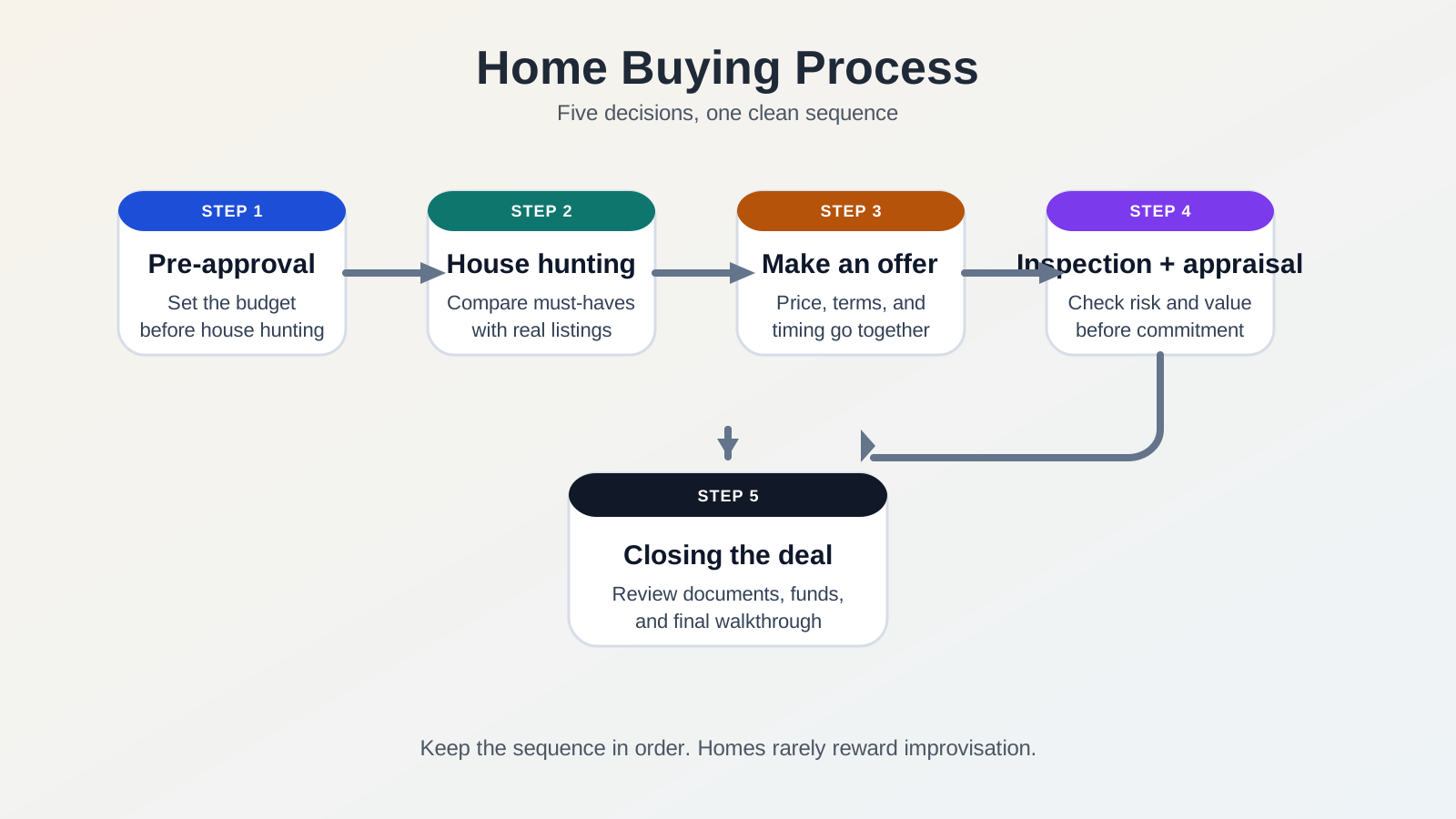
Buying a home is a sequence of decisions, not a single leap. The best way to keep it manageable is to treat it like a project with clear stages: get your financing in order, narrow the search, make a disciplined offer, check the property carefully, and close without letting paperwork turn into performance art.

If you are buying for the first time, the process usually feels harder than it is because each step comes with its own vocabulary. Official guides from the Consumer Financial Protection Bureau and HUD are useful reference points, but the practical version is straightforward: know your budget, know your priorities, and do not confuse urgency with progress.
1. Get pre-approved for a mortgage
Mortgage pre-approval is a lender’s estimate of how much you can borrow based on your income, debt, credit, and assets. It is more useful than a casual online calculator because it tells you what you can likely afford in the real market, not in a fantasy spreadsheet.
Pre-approval helps in three ways:
- It sets a realistic price range before you start touring homes.
- It shows sellers that you are a serious buyer.
- It reduces the risk of falling in love with a home you cannot comfortably finance.
To get pre-approved, gather recent pay stubs, W-2s or tax returns, bank statements, and a list of debts. Then compare a few lenders so you understand rates, closing costs, and loan terms. If you want a structured next step after this article, the Services page explains the support available, the About page explains the business behind the site, and the Contact page is the place to ask for guidance.
For a broader view of the financing stage, the USA.gov homebuying guide gives a practical overview of what happens before you make an offer.
2. House hunt with a short list, not a wish list
Good house hunting starts with priorities. Separate your must-haves from your nice-to-haves before you browse listings. That keeps the search focused and keeps you from wasting weekends on homes that look impressive on a phone screen but fail the basic test of daily life.
A simple way to sort your list:
| Must-have | Nice-to-have |
|---|---|
| Location within budget | Upgraded kitchen finishes |
| Enough bedrooms or work space | Finished basement |
| Commuting distance that works | Large backyard |
Use online listings, map tools, and neighborhood research together. A listing photo tells you what the owner wanted you to see. A map tells you what your life would actually look like after the keys are in your hand.
This is also the stage where a real estate professional can save time by filtering noise. If you are comparing neighborhoods, school zones, or resale tradeoffs, stay organized and keep notes on every property you tour.
3. Make an offer that fits the market
An offer is not just a number. It is a package of price, terms, timing, and contingencies. In a competitive market, the cleanest offer often wins. In a slower market, the room to negotiate is usually better, but the property still has to justify the price.
Before you offer, check recent comparable sales, how long homes are sitting on the market, and whether the seller seems to care more about speed or certainty. A strong offer usually includes:
- A price that matches the local market, not your favorite number.
- Reasonable earnest money.
- Clear financing and inspection terms.
- A closing date that works for both sides.
If the first counteroffer comes back, do not treat that as a rejection. It is just the market asking for a better business case.
For a deeper consumer explanation of the buying path, Fannie Mae’s education resources are a useful companion while you compare loan options and homeownership basics.
4. Do not skip the inspection and appraisal
The inspection protects you from buying expensive problems. The appraisal protects the lender from financing more than the home is worth. They are related, but they are not the same thing.
During a home inspection, a licensed inspector looks at the roof, foundation, electrical system, plumbing, HVAC, windows, and visible signs of damage. The goal is not perfection. The goal is to find the issues that matter before they become your monthly surprise budget.
If the inspection report shows problems, you usually have three choices:
- Ask the seller to make repairs.
- Negotiate a price reduction or credit.
- Walk away if the risk is too high.
The appraisal is simpler. If the appraised value comes in low, your lender may not finance the full purchase price. That can lead to a price change, more cash from the buyer, or a renegotiation. It is not fun, but it is normal.
For a plain-English look at appraisals and homebuying rules, the HUD buying resources are worth keeping open in another tab.
5. Close the deal carefully
Closing is the final administrative stage. The work is simple to describe and easy to mishandle if you are tired. Review every document before you sign, confirm the wire instructions directly with your lender or closing agent, and read the closing disclosure line by line.
On closing day, expect to:
- Review the final loan terms and settlement statement.
- Pay closing costs and any required down payment funds.
- Sign the loan and ownership paperwork.
- Receive the keys after the transfer is complete.
Closing costs often include lender fees, title fees, prepaid taxes, insurance, and recording charges. The exact total depends on the home, loan, and local market, so get an estimate early instead of trying to solve it in the parking lot.
Before you take possession, do a final walkthrough. Check that agreed-upon repairs are done, appliances are still there, systems are working, and no new damage appeared between contract and closing. It is the last chance to catch a problem while someone else still has to care about it.
A practical way to stay on track
Here is the short version of the process:
- Get pre-approved.
- Set your priorities and search with discipline.
- Make a clean, realistic offer.
- Use the inspection and appraisal to manage risk.
- Close carefully and verify every detail.
If you keep those five steps in order, the home buying process becomes much easier to manage. The timeline may still be busy, but busy is not the same thing as confused.
When you are ready to keep going, start with the Services page for the practical support options, the About page for context, and the Contact page if you want to ask a specific question.