A family-friendly home is not a Pinterest board; it is a set of decisions that trade a little convenience for a lot fewer emergency room visits.
Parents asking “Where do I start with childproofing?”, “Which furniture is actually safe around toddlers?”, “How do I keep the house from looking like a toy store exploded?”, and “Is there a way to make this manageable instead of a second job?” are asking the right questions. A home that works for children does not happen by accident. It happens when someone decides what the priorities are and sequences the work accordingly. As the U.S. Consumer Product Safety Commission notes in its home safety guidance, childproofing is a layered process that changes as children grow and gain new abilities.
That matters because the stakes are real. Unintentional injury remains one of the leading causes of emergency visits for young children, and a large share of those injuries happen at home. The American Academy of Pediatrics home safety resources lay out the same pattern year after year: falls, furniture tip-overs, electrical contacts, and choking hazards account for a disproportionate share of preventable incidents. None of these require a fortress. They require attention to a short list of high-risk areas and the discipline to fix them before a child finds them first.
In this guide, I will walk through the five priorities that make a home genuinely family-friendly: childproofing the high-risk zones, creating play areas that actually get used, choosing furniture and decor that survive children, building in spaces for family activities, and managing clutter before it manages you. Each section is a decision point, not a decoration project. If you want help executing any of this, the services page outlines how Century 21 City can support the next step, and the about page explains the approach behind it.
Family-Friendly Home Terms Worth Knowing
Before diving into the priorities, it helps to lock down a few terms. They sound like safety jargon, but they are really just shortcuts for the decisions you will be making repeatedly.
| Term | What it means | Why it matters |
|---|---|---|
| Childproofing | Modifying the home to reduce hazards a child can reach or trigger | It is the baseline layer of safety, not a one-time project |
| Tip-over risk | The chance that a child climbing or pulling on furniture causes it to fall | Dressers and TVs are among the most dangerous objects in a home with small children |
| Anchor | A strap or bracket that secures furniture to the wall | It is the single most effective fix for tip-over fatalities |
| Choking hazard | Any object small enough to fit through a toilet paper tube | It is the rule of thumb for sorting toys and decor by age |
| Accessible storage | Storage placed at a child’s height so they can reach and put away items | It is what makes a play area self-sustaining instead of parent-dependent |
1. Childproofing Your Home
Childproofing is the foundation. Everything else, play areas, furniture choices, activity zones, builds on the assumption that the dangerous stuff is already handled. The goal is not to wrap the entire house in foam. The goal is to identify the small number of places where a child can get seriously hurt and close those gaps first.
The CPSC’s childproofing checklist is a useful starting framework. It identifies the devices and fixes that address the most common hazards. Below is the priority sequence I recommend, ordered by risk and ease of implementation.
Secure stairs and doorways first
Falls down stairs are high-consequence and low-effort to prevent. Install safety gates at the top and bottom of every staircase. Hardware-mounted gates are more reliable than pressure-mounted ones at the top of stairs, where a child leaning on the gate can dislodge a pressure fit. The gate at the bottom prevents a crawling child from reaching the stairs in the first place.
- Top of stairs: Use a hardware-mounted gate anchored to the wall or stair post.
- Bottom of stairs: A pressure-mounted gate is acceptable here, but hardware-mounted is still better.
- Doorways to hazardous rooms: Gates or childproof door knob covers for kitchens, laundry rooms, garages, and basements.
Cover outlets and secure cords
Outlet covers are cheap, fast, and effective. Use sliding outlet covers rather than simple plug caps, which a determined toddler can pry out and which then become a choking hazard themselves. Secure electrical cords along baseboards or behind furniture so children cannot pull lamps, appliances, or electronics down on themselves.
Anchor heavy furniture to the wall
This is the single most important childproofing step, and it is the one most often skipped. Dressers, bookshelves, televisions, and freestanding appliances can tip over when a child climbs or pulls on them. The CPSC’s Anchor It campaign reports that tip-over incidents have caused dozens of fatalities and thousands of injuries, primarily involving children under ten.
The fix is straightforward: use anti-tip brackets or furniture straps to secure every piece of furniture taller than 30 inches to a wall stud. If you are renting and cannot drill, discuss anchor options with your landlord, because the risk is not theoretical.
| Childproofing priority | Hazard it addresses | Effort level |
|---|---|---|
| Safety gates at stairs | Falls down staircases | Low, one afternoon |
| Outlet covers | Electrical shock and burns | Very low, minutes per room |
| Furniture anchors | Tip-over injuries and fatalities | Low to moderate, requires a stud finder |
| Cordless window treatments | Strangulation from blind cords | Moderate, may require replacement |
| Locks on cabinets with hazardous contents | Poisoning and chemical burns | Low, magnetic or latch systems |
Lock away hazardous materials
Cleaning supplies, medications, sharp tools, and garage chemicals belong behind locked cabinets or on high shelves out of reach. Child-resistant packaging is not childproof; it only slows a child down. Store the original containers, never transfer chemicals to food containers, and keep the number for Poison Control, 1-800-222-1222, visible in the kitchen and saved in your phone.
2. Creating Play Areas
A play area is not just a place where toys live. It is a designated space that tells a child, “This is where you explore, build, and make a mess, and the rest of the house has different rules.” Without that boundary, toys migrate to every room and the home feels like it belongs to the toys, not the family.
The principle is simple: contain the chaos to a space where chaos is welcome. That space does not need to be a full room. A corner of the living room, a section of a bedroom, or a finished basement area can all work. What matters is that the boundary is clear, the space is safe, and the child can reach their things without help.
Choose the right location
Pick a spot that is visible from the main living area so you can supervise without hovering. Avoid high-traffic hallways where a child building a block tower gets bulldozed every three minutes. If the play area is near a kitchen or staircase, make sure the childproofing for those zones is already in place.
Stock it with age-appropriate materials
The toys and activities in the play area should match the child’s developmental stage. A toddler needs sturdy, large-piece toys with no small parts. A school-age child benefits from building sets, art supplies, and books they can reach independently. The choking hazard rule, anything that fits through a toilet paper tube, is a practical filter for sorting what stays and what gets stored away until the child is older.
Make storage accessible
This is the detail that separates a play area that works from one that becomes a daily cleanup battle. Use open bins, low shelves, and labeled baskets at the child’s height. If a child can put a toy away without asking for help, they are more likely to do it. If every toy requires an adult to reach a high shelf, the floor becomes the default storage location.
- Open bins: Faster to use than lidded boxes, especially for younger children.
- Low shelves: Keep the most-used items at arm’s reach for the child.
- Picture labels: Help pre-readers know where things go without asking.
- Rotation system: Store half the toys and swap them every few weeks to keep the space fresh without buying more.
3. Choosing Safe Furniture and Decor
Furniture is a long-term decision. The couch you buy today will still be there when your child is using it as a trampoline, a fort, and a snack table, sometimes simultaneously. Choosing with children in mind means prioritizing durability, cleanability, and safety over fragile aesthetics that will not survive the first juice spill.
Opt for rounded edges
Sharp corners on coffee tables, console tables, and low shelving are a common source of head and eye injuries in homes with small children. When buying new furniture, choose pieces with rounded or beveled edges. For existing furniture with sharp corners, adhesive corner guards are an inexpensive interim fix, though they are not a substitute for eventually replacing the most dangerous pieces.
Choose materials that are easy to clean and durable
Performance fabrics, leather, and treated microfiber resist stains better than raw cotton or linen. Washable slipcovers are a pragmatic choice for sofas and dining chairs. For flooring, hard surfaces like luxury vinyl plank or sealed hardwood are easier to clean than carpet, though a washable rug can soften a play area without committing to wall-to-wall carpeting.
If your home was built before 1978, be aware that old paint may contain lead. The EPA’s guidance on lead in the home environment recommends having deteriorating paint tested, especially in homes with young children, because lead dust from chipping paint is a serious developmental health risk.
Avoid small or fragile decor items
Decorative objects on low surfaces, vases, figurines, candles, and small picture frames, are either choking hazards, breakage hazards, or both. Either move them to high shelves or accept that they will not last. The same applies to tablecloths and runners that a child can pull down along with everything on top of them.
| Furniture choice | Family-friendly option | What to avoid |
|---|---|---|
| Coffee table | Rounded ottoman or soft-edge table | Glass-top tables with sharp corners |
| Sofa | Performance fabric or washable slipcover | Delicate linen or dry-clean-only upholstery |
| Bookshelf | Low, anchored shelving with open bins | Tall unanchored units with breakable display items |
| Dining chairs | Sturdy, wipeable, tip-resistant | Lightweight chairs that tip easily when climbed |
| Flooring | Sealed hardwood or luxury vinyl plank | Fragile natural stone or hard-to-clean carpet in eating areas |
4. Incorporating Family Activities
A family-friendly home is not just safe; it is a place where the family actually wants to spend time together. The most effective way to encourage that is to design spaces that make shared activities easy to start and easy to clean up. If game night requires moving three pieces of furniture and finding missing pieces in four drawers, it will not happen. If the board games are in a visible cabinet next to the table, it happens on its own.
Create a family game night area
Designate a table, whether it is the dining table or a dedicated game table, and store board games, cards, and puzzles within arm’s reach. The lower the activation energy, the more often the activity happens. A shelf of games next to the table does more for family time than a playroom full of toys in another wing of the house.
Design a reading nook
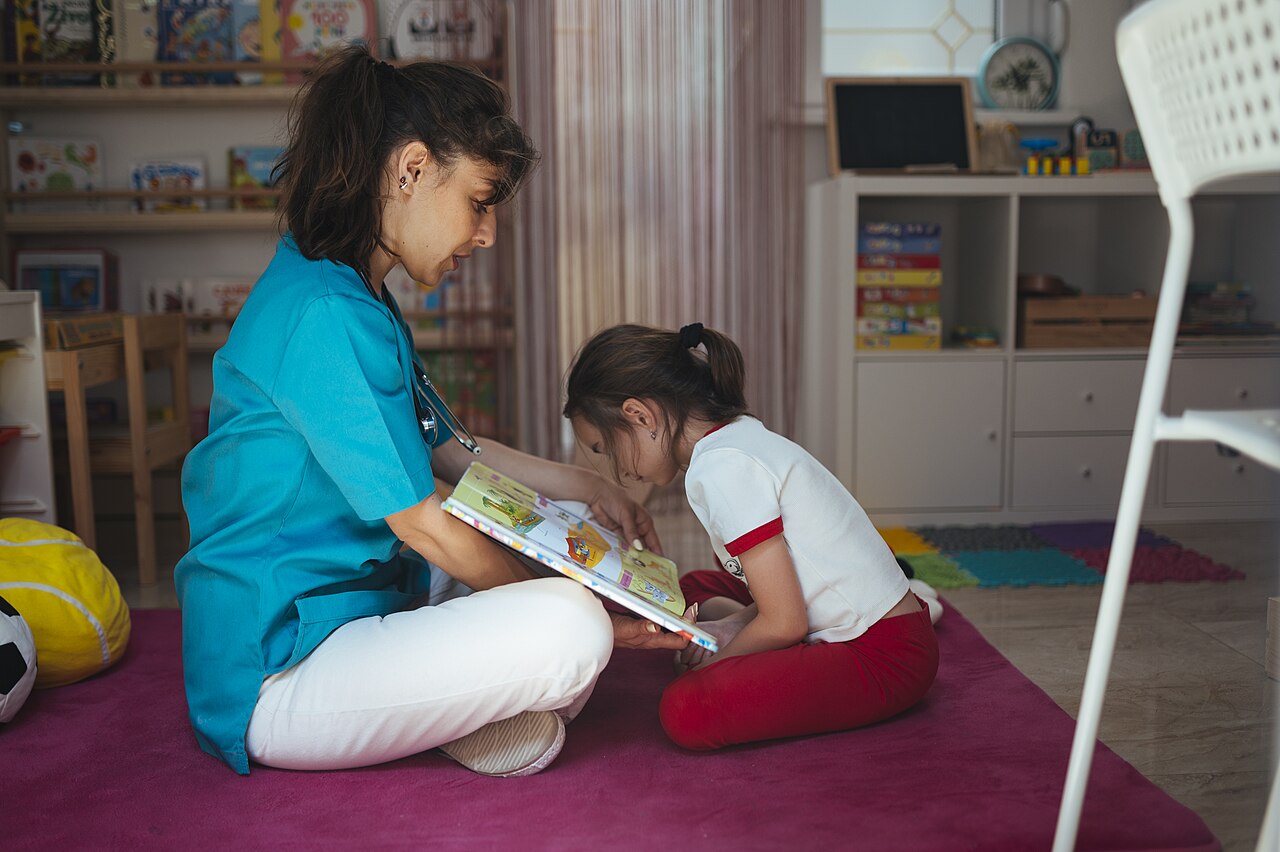
A reading nook does not require built-in bookshelves and a window seat. It requires a comfortable spot, good lighting, and books that are easy to reach. A low bookshelf with forward-facing book displays, a floor cushion or small armchair, and a lamp are enough. The American Academy of Pediatrics guidance on reading with young children emphasizes that shared reading builds language and bonding, and having a dedicated space makes it a habit rather than an event.
Include accessible art and craft supplies
Keep a bin of washable markers, crayons, paper, and stickers in an accessible location. The key word is washable. Designate a surface that can handle spills, whether it is a kitchen table with a wipeable cover or a small craft table in the play area. Store supplies in a caddy that can be pulled out and put away quickly, so the craft session does not require a twenty-minute setup.
Build in outdoor time
If you have a yard, balcony, or nearby park, make the transition easy. Keep shoes, sunscreen, and outdoor toys near the door. A hook for each child’s jacket and a basket for outdoor gear reduces the friction that turns “let’s go outside” into a fifteen-minute search for matching shoes.
5. Tips for Managing Clutter
Clutter is the operational cost of a family home. It is not a moral failing; it is the natural result of small humans generating art projects, outgrowing clothes, and accumulating birthday gifts faster than any storage system can absorb. The goal is not zero clutter. The goal is a system that keeps clutter from becoming the dominant feature of the house.
Use storage that matches how children actually behave
Children will not use a storage system that requires more effort than leaving the item on the floor. Open bins, labeled baskets, and low hooks work because they are faster than the alternative. Closed cabinets with latches look tidier but are rarely used by children under seven without prompting. Design for the behavior you have, not the behavior you wish you had.
Declutter on a schedule, not on a feeling
Waiting until you are overwhelmed by clutter means the decluttering session will be stressful and incomplete. Instead, build a simple rotation: before birthdays and holidays, go through toys and clothes with the child and donate or store what they have outgrown. The CPSC’s kids and babies safety section is also a good reference when sorting items, because recalled or age-inappropriate toys should be removed, not just reorganized.
Involve children in tidying up
Children as young as two can help put toys in a bin if the bin is accessible and the task is specific. “Clean your room” is too abstract. “Put the blocks in the blue bin” is a task a child can complete and feel good about. Building cleanup into the routine, before meals or before bedtime, teaches responsibility and reduces the parent’s cleanup load at the same time.
- One in, one out: For every new toy that enters, an old one gets donated or stored.
- Daily reset: A ten-minute family tidy before bedtime keeps clutter from compounding.
- Seasonal purge: Four times a year, sort clothes and toys by size and age-appropriateness.
- Donation station: Keep a labeled box in a closet for items to donate; when it is full, take it.
Conclusion: Priorities, Not Perfection
A family-friendly home is not a finished project. It is a set of priorities that shift as children grow. The sequence is straightforward: secure the hazards first, create spaces where play and family time happen naturally, choose furniture that can take a beating, and build clutter management into the routine so it does not become a crisis.
The key takeaways:
- Childproofing is the non-negotiable baseline. Anchor furniture, gate stairs, cover outlets, and lock up hazardous materials before anything else.
- Designated play areas contain the chaos. A clear boundary with accessible storage makes play sustainable and cleanup realistic.
- Furniture should be safe, durable, and cleanable. Rounded edges, performance fabrics, and anchored shelving are not luxuries; they are operational decisions.
- Family activity spaces should have low activation energy. If the games are next to the table, game night happens. If they are in a closet behind the vacuum, they do not.
- Clutter management is a system, not a feeling. Schedule the purges, use accessible storage, and involve the children in the routine.
If you are planning a larger home project, whether it is a renovation, a move, or a safety upgrade, the services page outlines how Century 21 City can help you sequence the work. To learn more about the approach behind it, visit the about page. The goal is the same in every case: make the decisions that matter first, and let the rest follow.